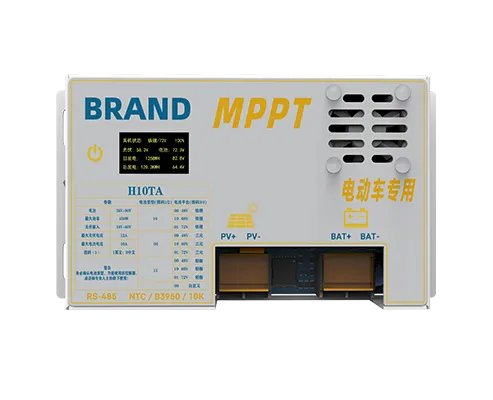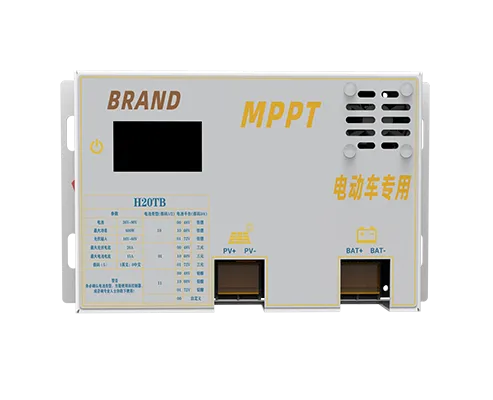
Many e-mobility DIYers and manufacturers run into a common issue when adding solar panels to electric tricycles or delivery carts: roof space is limited, but battery voltages are high (48V, 60V, or 72V). This guide explains exactly how to solve it with a Boost MPPT controller — and why a standard Buck MPPT controller won't work.
1. The Problem: High Battery Voltage vs. Limited Roof Space
Standard solar controllers (Buck MPPT) require the solar panel's input voltage (18V–32V) to be higher than the battery pack voltage. To output 60V–72V, you would traditionally need 2 or 3 large panels connected in series, which simply won't fit on a tricycle roof.
"With a buck controller, a 60V or 72V battery pack means 2–3 panels in series. On a small vehicle roof that is simply not practical."
2. How Boost MPPT Works on Light EVs
Instead of stepping voltage down, a Boost MPPT takes a lower PV input voltage (e.g., 16V–60V from a single 300W–450W flexible panel) and steps it UP to charge 48V, 60V, or 72V battery systems.
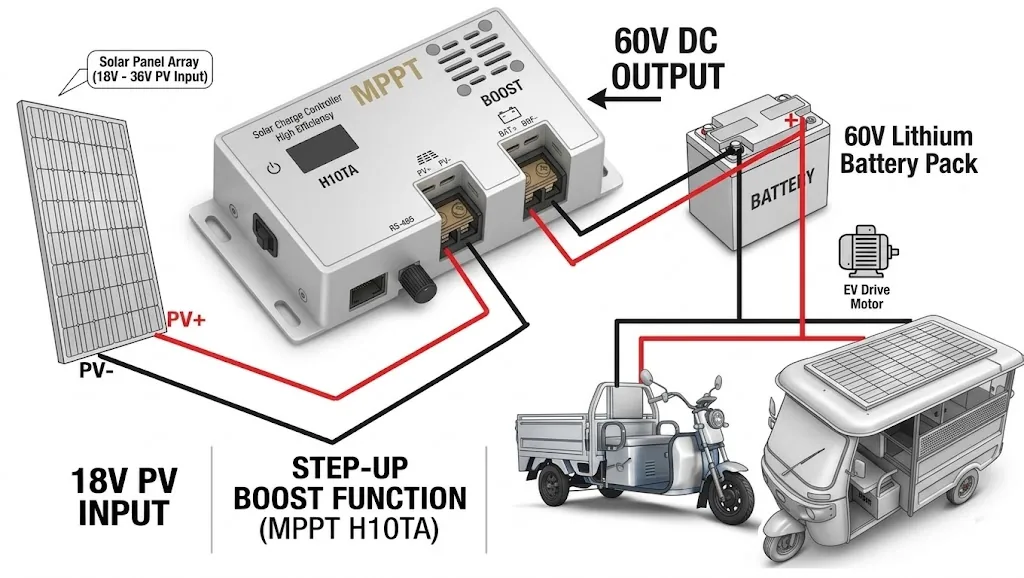
The diagram above shows the complete chain: a low-voltage solar panel array feeds the boost MPPT controller, which steps the voltage up to the pack level and delivers energy to the battery and the EV drive motor.
| Feature | Standard Buck MPPT | Boost MPPT (e.g., SUNOPEN H10TA) |
|---|---|---|
| PV Input Voltage | Must be higher than battery | Lower than battery (16V–60V DC) |
| Battery Voltage | Usually 12V / 24V / 48V | Boosts dynamic output to 36V–90V (supports 48/60/72V) |
| Panel Requirement | 2–3 rigid panels in series | 1 single flexible/custom roof panel |
| Ideal Application | Stationary off-grid homes | E-trikes, tuk-tuks, golf carts, mobile SCADA |
3. Key Specs to Check Before Retrofitting
- Tracking Efficiency: Look for tracking efficiency above 99% to squeeze every watt from mobile panels.
- Thermal Dissipation: E-trikes operate in harsh, hot environments (e.g., Southeast Asia/Latin America). Industrial-grade heat sinking is critical to prevent thermal throttling.
- Communication: An RS-485 interface or Bluetooth is useful if you are managing a fleet or customizing parameters for custom lithium (LiFePO4/NMC) curves.
- Battery Compatibility: The controller should support all types of chargeable batteries including FLD/GEL/LI/SLD and User-defined profiles.
💡 Key Data
SUNOPEN's boost MPPT controllers achieve 99.9% tracking efficiency and accept a wide 16V–60V PV input, making them a drop-in solution for high-voltage e-mobility retrofits.
4. Inside the Controller: Built for Vehicle Duty
Vehicle-mounted controllers face constant vibration, wide temperature swings, and dusty air. Industrial-grade PCB design with thick copper traces, high-voltage bulk capacitors, and robust heatsinking is what separates a controller that survives years on the road from one that throttles or fails mid-season.
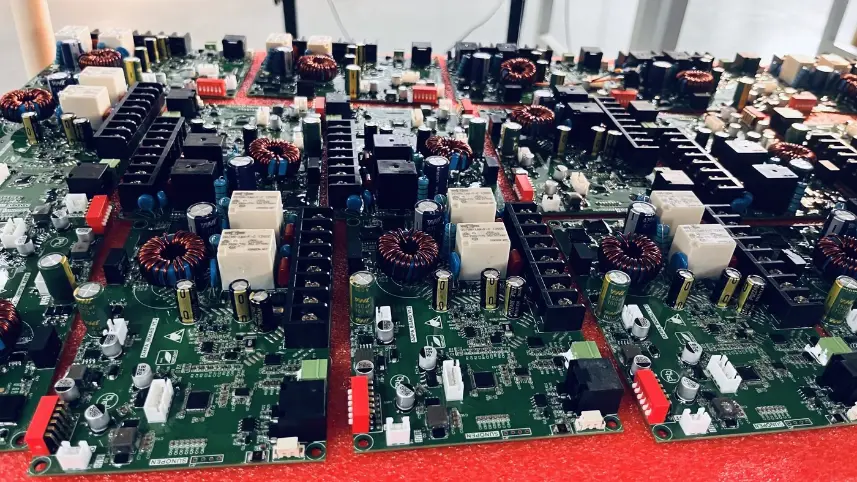
SUNOPEN's boost controllers are built with silicon power components selected for vehicle vibration and heat, keeping tracking stable even when roof temperatures climb above 60°C.
5. Real-World Range Extension
For a standard 60V 50Ah e-trike equipped with a single 400W panel and a boost controller (like the SUNOPEN H10TA series), average daily solar yield in sunny regions is around 1.5–2.0 kWh, which adds roughly 20–30 km of extra daily range without grid charging.
🚀 Example Calculation
60V 50Ah e-trike + 1 × 400W roof panel + SUNOPEN H10TA Boost MPPT = 1.5–2.0 kWh/day ≈ +20–30 km free daily range.
6. Product Spotlight: SUNOPEN H10TA Series
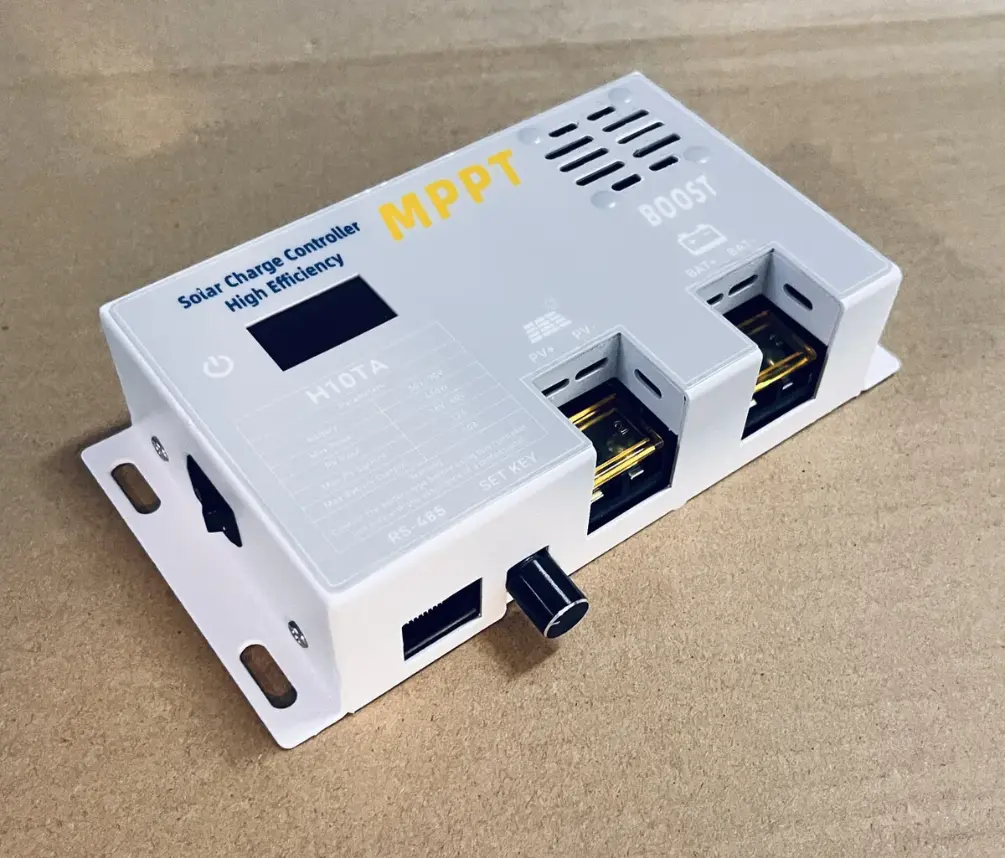
The SUNOPEN H10TA is a 450W boost MPPT controller purpose-built for e-trikes, tuk-tuks and light EVs. It features automatic 48V/60V/72V detection, RS-485 communication, and full protection against reverse polarity, over-voltage and short circuit.
7. Conclusion
Adding solar charging to a high-voltage e-trike or light EV is simple once you choose the right topology. A Boost MPPT controller unlocks the full power of a single roof panel, adds tens of kilometres of free range per day, and reduces fleet charging costs for wholesalers and delivery operators.
Contact SUNOPEN today to discuss boost MPPT controllers for your e-mobility program or OEM project.